
A deed in lieu of foreclosure lets you hand your home’s title back to the lender in exchange for canceling what’s left of your mortgage debt. It skips the public foreclosure sale, but your lender has to agree to it, your title needs to be free of extra liens, and you’ll still want to weigh the credit and tax hit before you sign anything.
Nobody wakes up one morning and decides a deed in lieu sounds fun. It’s usually the option homeowners land on after months of missed payments, unanswered loan modification requests, and a mailbox full of letters they’ve stopped opening. If that’s where you are right now, you’re not alone, and you’re not out of options either.
What is a Deed-in-Lieu of Foreclosure, and What Does it Actually Do?
A deed-in-lieu of foreclosure is a legal agreement where a homeowner voluntarily transfers their property’s title to the lender in exchange for being released from the remaining mortgage debt, avoiding the foreclosure process entirely.
Here’s the short version: you sign your property’s deed over to the lender, and the lender agrees to release you from the mortgage. No trustee sale. No auction on the courthouse steps. No neighbors watching a sign go up in your yard. The lender takes the house, sells it themselves, and your loan balance disappears assuming the paperwork is done right.
That last part matters more than people think. A deed in lieu isn’t automatic, and it isn’t a right you can demand. It’s a negotiated deal, which means your lender can say no. They usually will if your home has other loans attached to it, which brings us to the part most articles skip over. If you’re still early in the process and haven’t received formal paperwork yet, it’s worth understanding a notice of default before you assume a deed in lieu is your only move.
Every foreclosure situation is different, and signing away your deed isn't always the smartest move, especially if you still have equity in your home. Talk to our team before you make it official. We'll walk through your loan balance, your home's real value, and every alternative on the table. Not Sure a Deed in Lieu Is Your Best Option?

Who Actually Gets Approved
Lenders don’t hand these out to anyone who asks. You’ll typically need to show real financial hardship job loss, a medical bill that ate your savings, divorce, a death in the family. Bank statements, tax returns, a hardship letter explaining what happened. It’s paperwork-heavy, and it’s slow.
Lenders also want a clean title. If your home only has the one mortgage, your odds go up. If you’ve got a second mortgage, a HELOC, a judgment lien from an old lawsuit, or unpaid HOA dues sitting on the property, things get complicated fast. Every one of those lienholders has to agree to release their claim before the primary lender will move forward and they rarely do it for free.
This is exactly why so many California homeowners who start down this road end up comparing short sale vs. foreclosure instead, and honestly, the math surprises most people.
The Junior Lien Problem Nobody Warns You About
Say you refinanced in 2021 and pulled out a home equity line to cover a kitchen remodel. That HELOC is a junior lien. Your primary lender isn’t going to accept a deed in lieu while that lien still sits on the title, because they’d be inheriting your equity dispute along with the house.
You’d need the HELOC lender to release its claim, sometimes for a small cash payment, sometimes for nothing at all if they think they’ll get zero in a foreclosure anyway. It’s a negotiation on top of a negotiation. Some homeowners get it done in six weeks. Others give up after three months of phone tag and move to a different exit strategy entirely.
Deed in Lieu vs. Foreclosure vs. Short Sale
People lump these together, but they’re not the same animal.
- Foreclosure: The lender takes the house through the courts (or, in California, a non-judicial trustee sale). You have the least control here.
- Short sale: You sell the home yourself for less than you owe, with lender approval on the shortfall.
- Deed in lieu: You skip the sale entirely and hand the title straight to the lender.
A deed in lieu is usually faster than a short sale because there’s no buyer to find, no inspection period, no financing to fall through at the last minute. But a short sale sometimes nets you a small cash-for-keys payment or a longer timeline to move out. If you’re weighing your options, it helps to see what selling your home with a realtor actually looks like before you commit to any single path.
What It Does to Your Credit and Your Taxes
A deed in lieu still shows up on your credit report, and it still hurts. Estimates generally put the score drop somewhere between 50 and 125 points depending on where your credit stood beforehand similar territory to a short sale, and usually a bit less damaging than a completed foreclosure. It stays on your report for around seven years, though its weight fades the further you get from it.
Taxes are the part people forget entirely. If the lender forgives debt beyond what your home was worth, the IRS can treat that forgiven amount as taxable income. There are exclusions for qualified principal residence debt, but the rules shift depending on your loan type and the tax year, so this isn’t something to guess about. A tax professional needs to look at your specific numbers before you sign.
Steps Involved in the Process
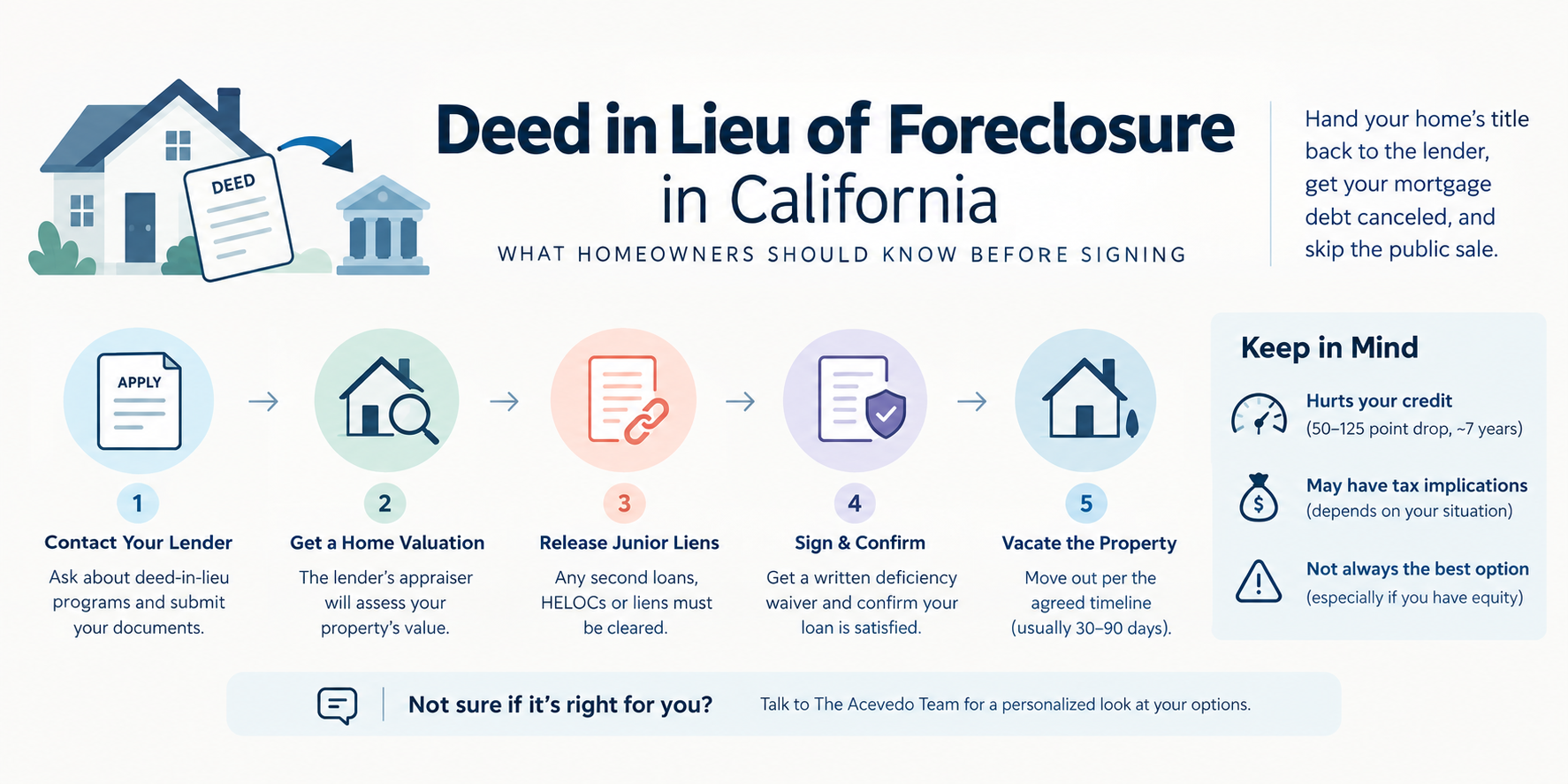
- Contact your loan servicer and ask specifically about deed-in-lieu programs not just “help,” because that word gets you routed to generic hardship departments.
- Submit a hardship letter, pay stubs, bank statements, and a list of any other liens on the property.
- Get a property valuation from the lender’s appraiser.
- Negotiate release of any junior liens.
- Request a written deficiency waiver so the lender can’t come after you later for the difference.
- Sign the deed transfer and confirm in writing that your loan obligation is satisfied.
- Vacate the property on the agreed timeline, usually 30 to 90 days.
Skipping step five is the single biggest mistake we see. Without that waiver, you could theoretically hand over your house and still owe money on it.
When This Isn’t the Right Move
If you have significant equity in your home, a deed in lieu is almost never the smart choice you’d be walking away from money that a traditional sale would put in your pocket. If you’re only a payment or two behind, a loan modification might fix things without touching your title at all. And if your home’s value has actually held up in your neighborhood, listing it even under time pressure often beats handing it over for nothing.
This is where a local read on your market really pays off. Our team has seen homes that owners assumed were underwater actually carry enough equity to avoid foreclosure entirely once priced correctly. Before you sign away a deed, it’s worth exploring foreclosure alternatives rather than assuming the worst.
Get a Second Opinion Before You Decide
A deed in lieu can be the right call. It can also be the wrong one, signed in a hurry by someone who felt like they had no other choice. That’s the part that bothers me most about how this topic gets covered online most guides make it sound like a clean, simple exit. It rarely is.
Before you sign anything, talk to someone who can actually look at your loan balance, your home’s current value, and your local market not a generic hardship script. The Acevedo Team has walked California homeowners through exactly this decision, and we’d rather you make it with full information than under pressure from a servicer’s deadline. Contact us before you make anything official.
Frequently Asked Questions
Does a deed in lieu of foreclosure hurt your credit score?
Yes. Most homeowners see a drop somewhere between 50 and 125 points, and it stays on your credit report for about seven years. It’s generally less damaging than a completed foreclosure but similar to a short sale in terms of long-term impact.
Can you still owe money after a deed in lieu in California?
You shouldn’t, but it depends entirely on your paperwork. California has anti-deficiency protections for purchase-money loans, but refinances and second mortgages don’t always qualify. Always get a written deficiency waiver before signing without it, you could still be on the hook for the shortfall.
How long does a deed in lieu of foreclosure take to complete?
Anywhere from six weeks to several months. Straightforward cases with a single lender and no junior liens move fastest. Homes with a second mortgage or HOA lien attached usually take longer, since every lienholder has to agree to release their claim first.
Is a deed in lieu better than letting a home go into foreclosure?
For most homeowners, yes, it’s typically less damaging to your credit, avoids a public trustee sale, and gives you more control over your move-out timeline. But if you have real equity in your home, working with real estate professionals to sell it the traditional way almost always leaves you better off financially than handing over the deed for nothing.